
How to Build Confidence in a Fearful Dog
Jul 09, 2026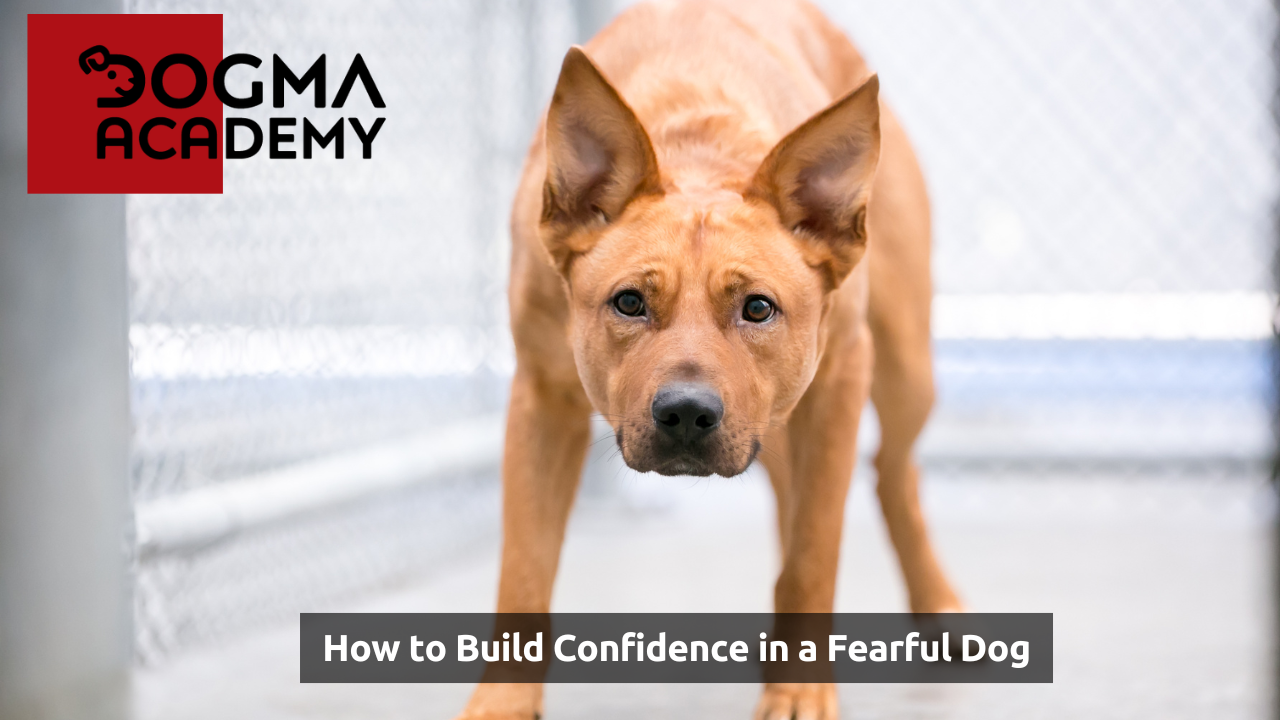
Working with a fearful dogs can be one of the most humbling experiences in your early career. You've studied the theory and know about classical conditioning, counter-conditioning, agency and more. But when you're standing in front of a dog who is frozen, trembling, or desperately trying to escape, the textbook can suddenly feel very far away.
Here's what we want you to know: that feeling of not knowing exactly what to do? It means you're paying attention. Fearful dogs require us to slow down, listen closely, and let go of any agenda. And when you get it right, like when you see a once-terrified dog start to offer a little curiosity, a relaxed body, a voluntary approach, there are few things more rewarding in this work.
This post walks through the core principles that guide effective confidence-building work with fearful dogs, and what to watch out for as a newer trainer navigating these cases.
First, Reframe What "Progress" Looks Like
One of the biggest mistakes new trainers make with fearful dogs is moving too fast. The don’t do this out of carelessness, but out of a desire to help. We want to see the dog improve and give the family hope. And so we push, even gently, toward milestones that the dog simply isn't ready for yet.
With fearful dogs, progress often looks invisible at first. It looks like a dog choosing to stay in the room rather than hiding. It looks like a slightly less tense body. It looks like the dog eating a treat near a mildly scary stimulus when yesterday they wouldn't.
Train yourself to notice and celebrate these micro-wins and help your clients see them too. When families understand that staying calm in a situation that previously caused a full stress response is a huge breakthrough, they stay motivated and engaged. That's your job as much as it is working with the dog.
Start With Safety, Not Skills
Fearful dogs are not ready to learn in the traditional sense until they feel safe. A dog in survival mode who is flooded, shut down, or in active flight mode cannot absorb new information the way a calm, curious dog can. The nervous system isn't available for it.
Before you introduce any formal training, focus on creating the conditions for safety:
- Manage the environment to reduce exposure to stressors the dog isn't ready for.
- Give the dog agency - let them choose when to approach, engage, or step away.
- Let interactions be dog-led. Avoid leaning in, reaching out, or making direct eye contact with a dog that isn't yet comfortable with you.
- Use your body language intentionally, such as turning sideways, crouching lower, or moving slowly.
This can feel counterintuitive. Families often want you to "do something" with the dog, and simply sitting quietly in the room can look a lot like nothing. But what you're actually doing is communicating that you are not a threat, and for a fearful dog, that is everything.
Work Below Threshold
You've learned about threshold in your education, and with fearful dogs, this concept becomes your most important guiding principle. A dog that is over threshold and is visibly stressed, reactive, or shut down is not in a state where learning or association-building can happen effectively.
The goal of desensitization and counter-conditioning is to expose the dog to their trigger at a level that is noticeable but manageable, and pair that exposure consistently with something positive. Over time, the emotional association shifts.
In practice, this often means working at distances and intensities that feel almost absurdly small. The dog who is terrified of strangers might start by simply being in the same yard, far away, while good things happen. Not approaching. Not interacting. Just existing near the scary thing at a distance where they can breathe.
If you find yourself frequently pushing to the edge of what the dog can handle, slow down. Sustainable confidence-building is built in small, successful steps, not big dramatic leaps.
Choice and Agency Are the Foundation of Confidence
One of the most powerful things you can do for a fearful dog is give them the experience of having their "no" respected. When a dog communicates discomfort through subtle signals like lip licking, yawning, looking away, or backing up, and those signals are acknowledged and honoured, something important happens: the dog learns that communication works.
This is the beginning of real trust. And trust is what makes everything else possible.
As you build the training plan, look for opportunities to build in choice at every step. Two-bowl protocols, voluntary engagement, consent-based handling - these aren't just feel-good approaches. They are evidence-based strategies that build emotional resilience rather than simple compliance.
A dog that has learned they can make choices and will be heard is a fundamentally different dog than one who has learned to simply tolerate. The first one is building confidence. The second one is just enduring.
Know When to Refer and Talk to the Vet
As a newer trainer, one of the most important professional skills you can develop is knowing the limits of your scope. Moderate to severe anxiety in dogs often has a physiological component that behaviour modification alone cannot fully address.
If you're working with a dog whose anxiety is significantly impacting their quality of life, it's worth having an honest conversation with the family about consulting their veterinarian or a veterinary behaviourist. Medication, when appropriate, doesn't replace training - it creates the neurological space for training to actually work. A dog who is too stressed to function cannot make the progress they deserve without additional support.
This isn't a failure on your part. Recommending a collaborative approach is a sign of competence and care, not limitation. Families will trust you more for being honest about what the dog needs, not less.
If a case begins to feel outside your current level of experience, reach out. Use your mentor hours or post in the community. Ask a more experienced colleague. Complex fear and anxiety cases are not cases to navigate alone, and seeking support is exactly what a responsible professional does.
A Note on Patience - With the Dog and With Yourself
Fearful dog cases can be slow. Some dogs take weeks to begin showing meaningful change. Some take months. There will be sessions where it feels like you're moving backward, and sessions that surprise you with how much the dog has progressed.
What we want to remind you of is this: these cases are some of the most meaningful work you will do as a trainer. The families are often exhausted, worried, and desperate for hope. The dogs are doing their absolute best with the nervous system they have. Your steady, compassionate presence, your refusal to rush, and your willingness to go at the dog's pace are all an important part of the intervention.
Be patient with the process. And be patient with yourself as you learn it. Confidence-building work has a way of building your confidence as a trainer too.
At Dogma Academy, we know these cases can feel weighty, especially in your early years. That's why our graduates have lifetime access to mentor and behaviour hours. So, when you're sitting with a hard case and aren't sure what to do next, you don't have to figure it out alone.
Because the best thing you can do for a fearful dog? Show up informed, stay curious, and ask for help when you need it.
